Network bench for iPhone
See public IP, resolver, IPv6, and connection facts on one desk—then run DNS, SSL, header, redirect, and port probes without leaving the app.
Tracewell is built for engineers, IT helpers, and anyone who needs a clear answer about a link or host before they trust it.
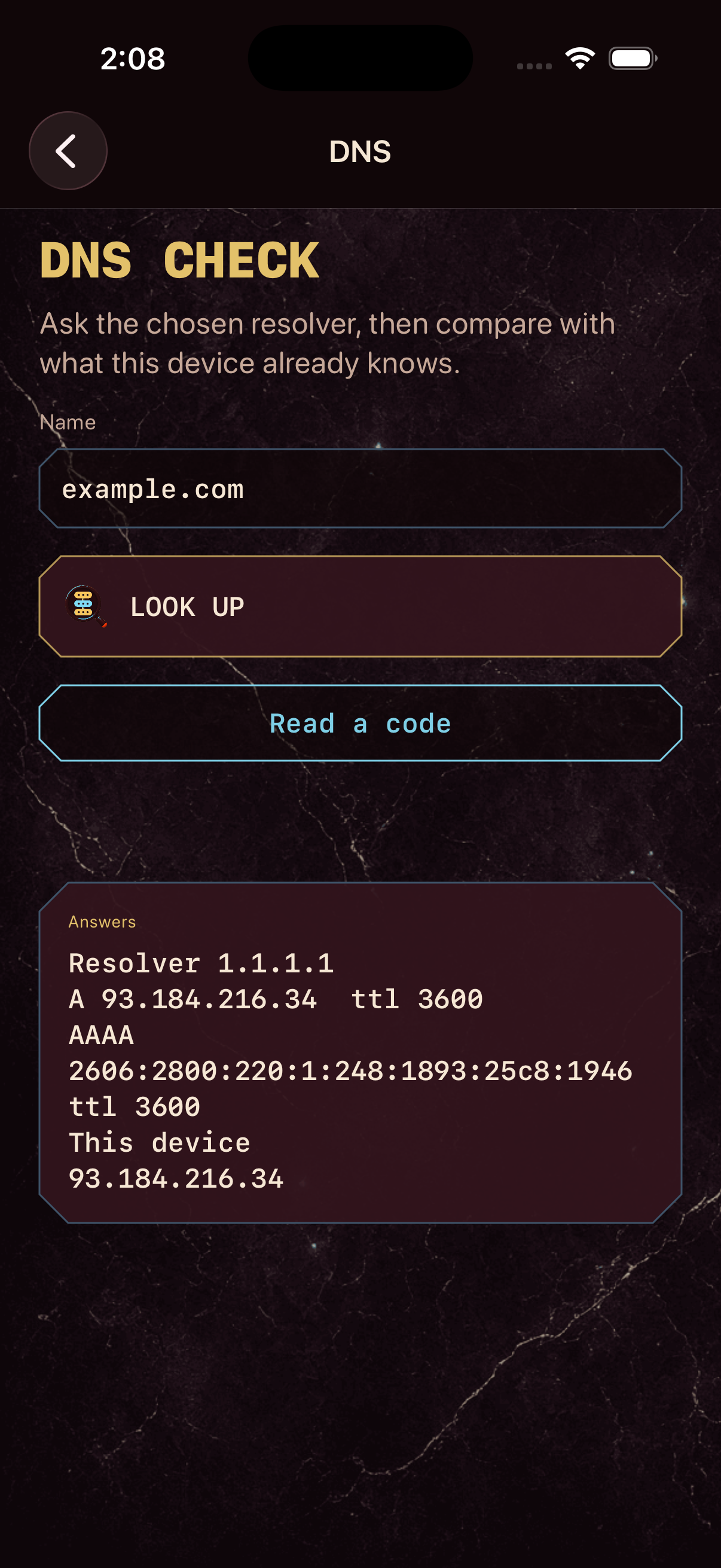
Each tool on the bench answers one concrete question about a host or URL: names behind an address, certificate trust, response headers, redirect hops, open ports, or Wi‑Fi facts on this device.
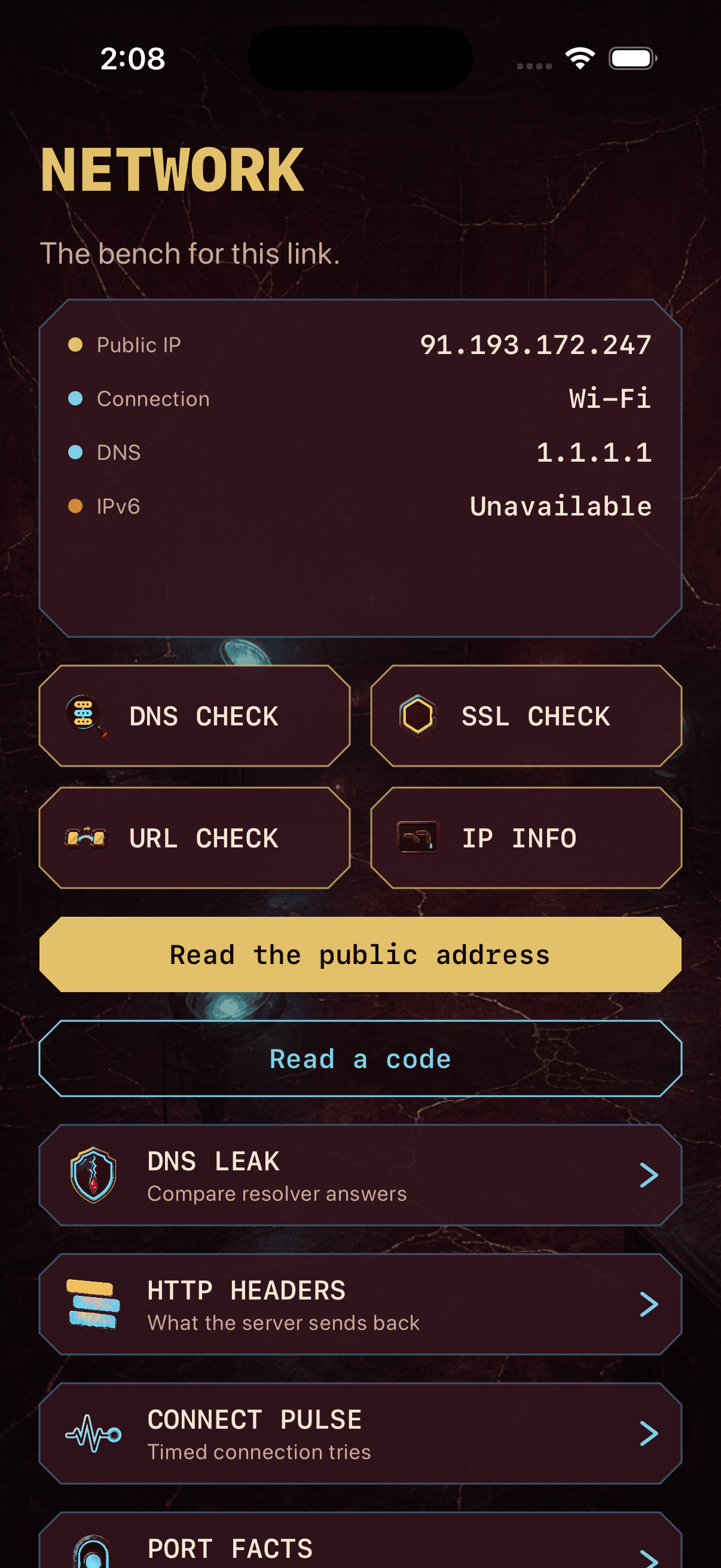
Start on the Network screen to read your public address, connection type, DNS resolver, and IPv6 status, then open DNS check, SSL seal, URL check, or IP info from the same grid.
Run header read, DNS leak compare, connect pulse, port facts, and radio facts when you need timing, resolver mismatch, or local Wi‑Fi context alongside a target.
Save results to History with pins, voice notes, or label photos. Re-open a trace to compare earlier runs on this iPhone.
Type a host, paste a link, or use Read a code on the bench to seed a probe from a printed QR code.
Typical flow from first launch to a saved trace:
Tracewell uses Apple’s WebKit view (WKWebView) in two places—not as a general browser, but as part of your diagnostic workflow on the same bench.
After a URL or redirect probe, tap View the page. Tracewell opens that address in a sheet with a built-in Web View so you can see the live page while SSL, headers, and hop results stay on the bench behind it. Scroll and interact with the page normally. Tap Close to return to the probe—nothing is uploaded to Tracewell servers; the page loads directly from the host you entered.
On a saved trace in History, open the report action. Tracewell renders a formatted HTML summary of that probe inside the same Web View so you can read targets, status lines, and body text in one scrollable document before you copy or share findings from your device.
The Web View is only shown when you choose View the page or open a report. It does not run in the background, track browsing across sites, or replace Safari—it helps you compare what you see on the wire with what the page actually shows.
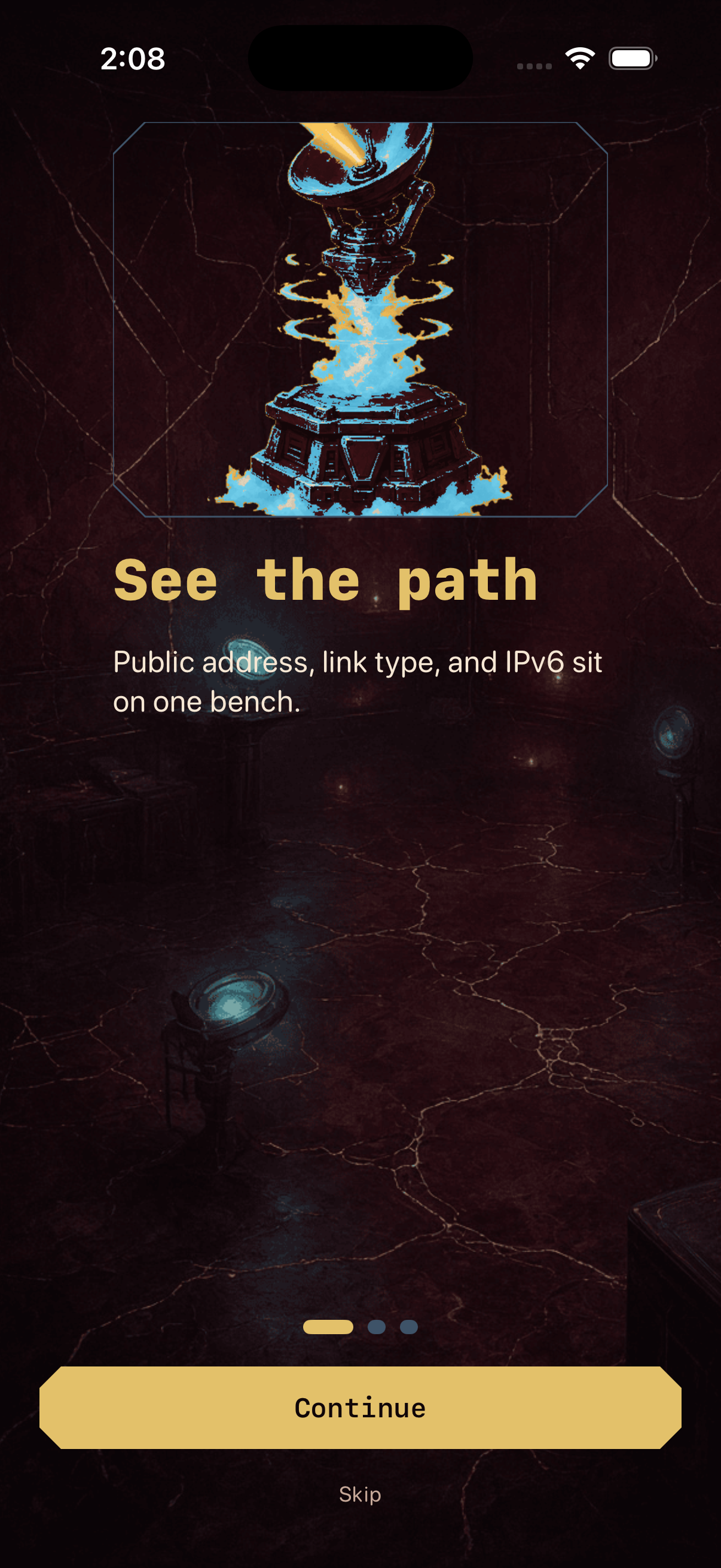
Onboarding, DNS check, and the network bench in the app.
Effective September 25, 2026. Tracewell is operated by Rimma Grigorjeva. This policy describes how the Tracewell iOS app handles information when you use network probes, history, attachments, and the built-in Web View.
Probe targets, results, pins, voice notes, photos, and history entries you create are stored on your iPhone. Tracewell does not operate a cloud account for your traces. When you run a probe, the app contacts the hosts and services needed to complete that check (for example DNS resolvers, the URL you enter, or a public IP lookup endpoint) from your device.
When you tap View the page, the Web View loads the URL you already entered for that probe, using WebKit on device. Tracewell does not inject analytics into those pages. When you open an HTML report, the content is generated locally from your saved trace and displayed in the Web View without sending the report to our servers.
Camera, microphone, and photo library access are used only when you attach a scan, voice note, or label photo to a trace, as described in the system permission prompts.
Questions: rimmagrigorjeva@icloud.com.

For help using Tracewell—running DNS or SSL probes, reading History, or using View the page and report Web Views—email rimmagrigorjeva@icloud.com with your iOS version and a short description of the probe you ran. Include the hostname or URL you tested (redact secrets if needed).
Tracewell cannot fix third-party sites, certificate misconfiguration on remote servers, or network blocks outside your device. If a page fails inside View the page, compare the SSL and header readouts on the bench to see whether the issue is trust, redirects, or connectivity.